41 years ago, when I was just a few months old, I’m confident someone like my father would have stared open-mouthed when a same sex couple married in a soap opera, scoffed at the idea of a Hindu Prime Minister and spat out his tea when a trans-gender woman won a popular reality programme.
He was far less progressive than my mother, but I know that, although his opinions were totally wrong, he wasn’t alone in his bias. I’m not proud he thought that way, and thankfully it didn’t rub off on me, but that’s how a huge section of his generation thought. It’s how some of them were raised.
Thankfully times have changed enormously in those 4 decades and I got to experience all of those milestones and appreciate them for their importance. The world is a different place, and someone like my father would now find their beliefs in the minority.
Thank goodness.
But as times have changed so have the rules, and ‘equality’ is a word we hear more and more often as it becomes clear vast swathes of people have been marginalised and excluded their whole lives.
Skin colour, gender, disability status, sexuality, religion, political opinion, size…the list goes on. We all want ‘equality’, and (by definition), it’s only fair that everyone experiences fairness,. The workplace should be the first place the rules of fairness (or equality) are implemented and adhered to.
Unequal equality
Although I don’t ‘work’, the writing and advocacy role I play for a few charities and publications means that I’m sometimes in a team-style environment and I’m exposed to the rules of fairness, equality and diversity. It’s not uncommon for me to have to read and accept terms of this nature so I can offer my creativity to an organisation. Although I’m just a volunteer, I think it’s right that everyone has to play by the same rules.
But…and this is where things get sticky…I’ve found multiple organisations who hide behind ‘equality and diversity’ rules, cowering beneath the law with beliefs that they are doing things right, when in reality their rules are actively EXCLUDING people, including me. And I’m fucking tired of it.
Now, I’m speaking from my own experiences today. I’ve had no other comments from people who feel excluded. Saying that, I know, without any doubt, that I’m not the only person who’s been cut-off by rules that SHOULD help everyone join in.
I’ll explain.
Rules, by definition, are rigid. You’ll struggle to find a contract clause that offers any fluidity and there’s good reason for this – when you’re asking someone to follow rules they need to be clear and concise. The world of law has to be black and white, leaving any grey areas will make it impossible to enforce the rules and reprimand people for breaking them.
However, as I tried to explain at the start of this post, there is an ever changing world of acceptance taking place around us. We uncover marginalised groups all the time, people who have been living underground because the world hasn’t previously accepted them. So as new groups pop up, the ‘rules’ don’t provide for them, and as a result they might continue to feel excluded and unrepresented.
For me personally I’ve found that these rules have cut me out on multiple occasions. Organisations (sometimes charities) who make clear that they have important policies in place to make sure no one is ignored from an opportunity, regardless of demographics and beliefs. But in many cases these organisations fail miserably to see that making ‘rules’ applies the same rigidity that excludes people instantly.
While I know they are trying to do things right, the rules are sometimes overlooking the point and failing to see that people are being limited by these concrete regulations.
When I make contact with an organisation and offer to help them with some writing, for example, I always make my circumstances and limitations clear. That I’m agoraphobic and stuck indoors because of poor health, that my mobility is also poor, and that I struggle with speech. But I also make clear when I CAN do, what my positive attributes are and the successes I’ve had in the past by working around those limitations. I think it’s important to be upfront, and I’d always hope that (even if I turn out to be the wrong person or the wrong fit) at worst, they’d be concise enough to say ‘thanks but no thanks’.
I’ve had responses to messages like this where, rather than actually reading and responding to my articulate message, the representative of the organisation has instead shoved ‘equality and diversity’ rules in my face, then passed me to their vacancy page.
Now, it’s pretty clear that someone with acute agoraphobia can’t be included when the only volunteer opportunities they SUGGEST are office based, or involve meetings in another location. It’s clear that someone with limited mobility would struggle with similar scenarios. To me it’s also obvious that someone with a mental illness who has opened up about their situation would require some flexibility and understanding in order to work around their limitations.
Putting a rigid ‘Equality and Diversity’ policy immediately in front of someone like me offers none of this. In fact, it simply makes clear that rules are the organisations first value, and being flexible isn’t possible.
If the rules are the first priority and I don’t fit that mould, that’s ok. But I’d rather hear that than have to read an equality paragraph that promises fairness but excludes me.
I’ve had questionnaires thrown at me, long lists of demographic information requested – gender, religion, sexuality, ethnic origin… if you’re being equal and diverse, why do you need this information? By definition you should consider EVERYONE, but by asking lists of questions that provide boxes I DON’T fit in to, you are actively excluding people rather than including them.
Having had a few conversations on the topic at home I think this information might be needed for reporting purposes, that the DWP or other governmental departments might want to know how inlcusive an organisation is being. Well, if that is the case, I still have to ask why, only this time the question is aimed at those who simply turn us all into statistics. It’s not equal to be placed in a box, is it?
It’s not just mental illness patients that need understanding. If your religion doesn’t appear on the list offered, if your disability means you can’t always travel easily, if your gender isn’t universally understood but you are asked to confirm the gender you were born with…these are all situations where organisations are making everyday people feel unequal and unwelcome and overlooking their talent and ability at the first hurdle.
Yes, it’s contraversial to make this observation, so I’m deliberately not mentioning any names or using specific dialogue, but I don’t think I need to. We’ve all seen these types of rules in action. We know organisations are using ‘equality and diversity’ questionnaires and clauses in their paperwork, and on the whole I think it’s seen as a good thing. A progressive move that is essential as the world evolves and becomes a more welcoming and acceptable place for us all to exist in.
I realise there are organisations who won’t want me for a myriad of reasons, and that’s ok. But, for me at least, a ‘thanks but no thanks’ would be far kinder and more acceptable than a policy that doesn’t include my needs and makes me feel unwelcome. When it’s a policy, when it’s a rule, when it’s proposed as black and white and removes the grey most of us live in, it’s a very final and inflexible exclusion, and it’s definitely more damaging than inclusive.
The equality conundrum
As always with these posts, I like to offer a solution or conclusion, if you will.
In this case it’s complicated and emotive, and I sympathise with organisations who find themselves having to look welcoming whilst reporting their success at being inclusive in an ever-changing landscape of people.
To me the solution is simple. It’s nothing.
You can be inclusive, welcome individuals that are new to your business, open your doors without prejudice, by simply stating one sentence at the beginning…
We are proud to be inclusive and we are learning to evolve our inclusivity as we go.
Stop adding to the list and forcing yourselves to miss out people who are already highly marginalised and excluded. Stop creating questions that only lead people to wonder why they have to answer them, why they need to be specific about their sense of self, lifestyle, beliefs and choices, why you need their measurements and favourite chocolate bar when all they want to do is be considered fairly for work.
What place do these questions have? What benefit do they bring? Because for those of us trying to make contact all these questions create is division and a need to conform. For what? So we jostle ourselves into a demographic that isn’t ours?
You can’t apply a benchmark, quota or goal for inclusion if you base your acceptance on anything outside of ability to complete the work.
That’s what everyone wants to be measured on – how suitable they are for the job. It has NOTHING to do with who they sleep next to, what colour their skin is or how able they are to walk to the bathroom.
People’s lives are fluid, and equality has to be the same, or (in my opinion) it isn’t equal.
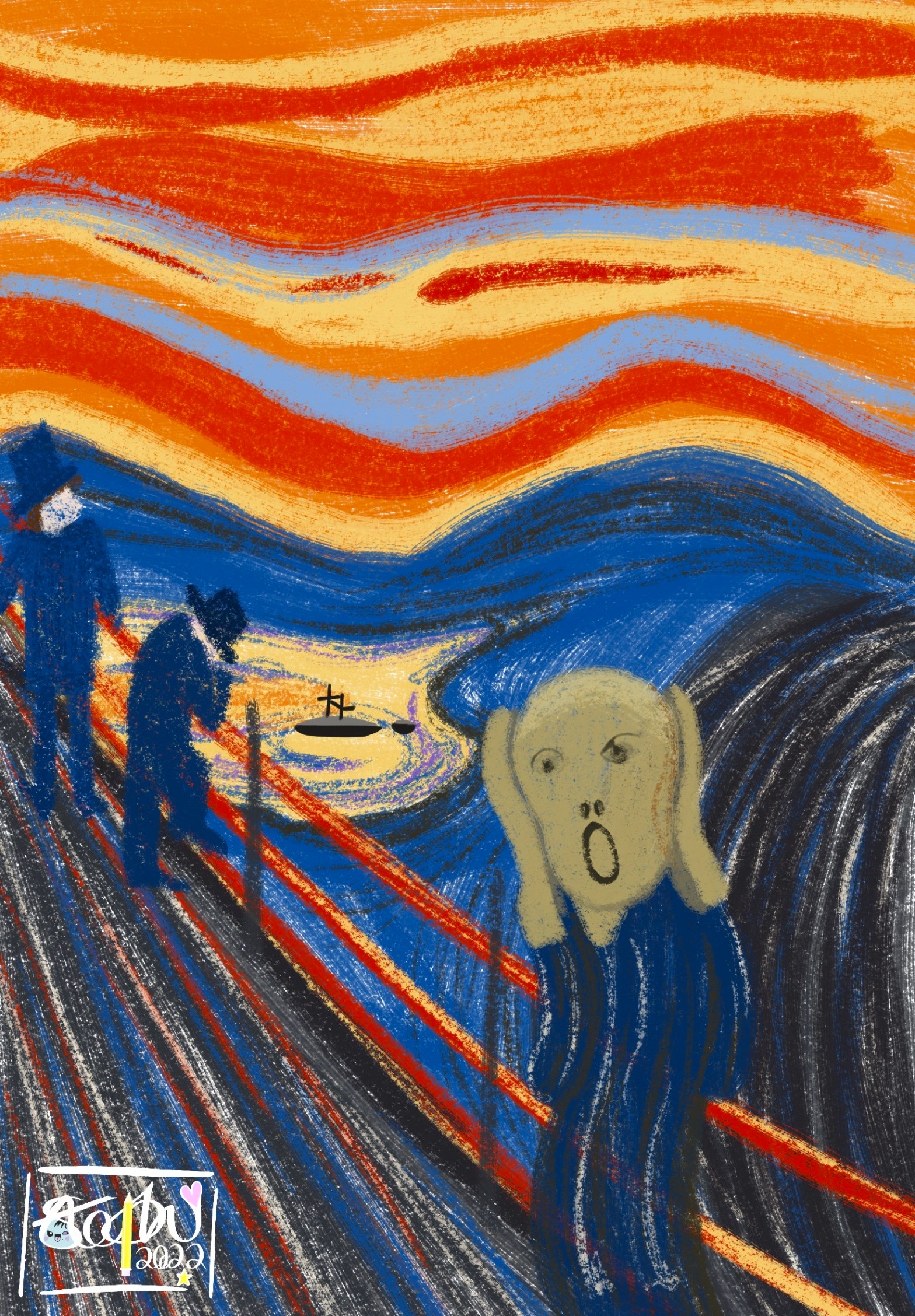
The picture
I drew this in a haze of frustration over a couple of emails I received on the same day, both thanking me for making contact, then spouting paragraphs that were clearly cut and pasted claiming that they include people regardless of their personal life. Both went on to indirectly decline my offer to get involved as a volunteer based on my lack of ability.
At the moment I drew this picture, I did NOT feel included. I even more lonely and unwanted, and I hope no one else has to feel that way as a result of simply offering to help out at no cost. The most annoying factor in all this is mainly that these people THINK they are helping people, that they are trailblazing, making pathways towards a better world. But they saw no value in me at all, and that was damaging. Actually, it IS damaging, and most people would feel the same.
The picture is my attempt at The Scream, originally created in 4 mediums by Edvard Munch. The anger and frustration the screamer feels is mirrored inside me whenever I fail to step-up or make strides in my ability. The misery me and my family face as long as people won’t give me a chance or see past my limitations and consider me based on my ability and NOTHING else.
I don’t feel equal, I don’t think the world we live in right now will allow that in my lifetime. Still, I hope equal strides are made in the coming four decades so my daughters generation see another big difference, just as I’ve seen in my lifetime. That she’s not excluded based on her limitations when all she is is glaringly obvious…
…a great candidate for the job.
Thanks for reading💜
 Creative Steph