I want to be one of those people that isn’t bothered by my reflection. A person who promotes self-love and appreciation of the body, whatever form it takes. At home I talk to our daughter regularly about her beauty both inside and out. I ask her about the things she likes and dislikes about herself and, although she struggles to fully explain, I always challenge the negatives well.
But privately, I’ve never reacted or reasoned this way with my own reflection.
Nearly a decade of being diagnosed as mentally unfit hasn’t really changed my happiness (or unhappiness) with what awaits me in the mirror. I’ve always actively avoided seeing myself for as long as I can remember – maybe that’s an indication that i’ve actually been unwell for longer than we think. We’ll never know.
But it was all amplified this time last year, which is the reason for this post. I’d managed to contract covid through our daughter, and I was incredibly unwell. I’d been unable to eat for weeks and sleeping more than 20 hours a day. As someone I’d call a permanent insomniac the idea of that much sleep should have been welcome, but I was so poorly it was impossible to appreciate anything positive at the time.
How did this effect my self-love? In just 2 weeks I lost half my hair and 10 kilos.
I’m bypassing the weightloss because I’ve put it back on since and, to be honest, I didn’t care at the time. But my hair…that’s a different story.
Thick to thin
When it comes to my tresses I consider myself to be very lucky. Both my parents had good quality, bulky hair for as long as I knew them, so I was locked in to be the same.
My hair is a variety of colours, including dark auburn and red, and after my 20’s I stopped dying it and favoured a natural look. Most of my life I’ve kept my hair long, and have always taken good care of it, using the best shampoo and conditioner I could afford at the time, and refraining from styling products and heat damage.
So when my hair started falling out last year I was genuinely devestated. I stopped washing it often because I was afraid I would cause even more to go. I brushed it lightly and stopped tying it up for the same reason.
As you’ll know, at the time I was already deep into my current agoraphobic hibernation, having already been incarcerated at home for about 6 months. Frankly, the hair loss helped me stay indoors. I was paranoid in the extreme that someone would see the patches on my head, that people would laugh at me even more. A fat, balding woman in a wheelchair. I was certain I’d be the subject of even more hurtful comments. As usual, I made up those comments in my head, but to me they were very real and very likely.
I started writing this post at the time. I wanted to be open about hair loss and how upsetting it is for someone like me to manage it. But I felt pathetic for saying it. There are so many other more important things happening in the world – war, financial crisis, energy depletion, famine and climate change – and here I am moaning about bloody hair.
A year on and I’m still growing back what I lost, but I’m incredibly grateful it’s coming. I worried it never would, that I’d have another thing to worry about every day, something else I’d have to hide if I ever ventured out again. Basically another excuse not to leave.
Thankfully, that excuse it starting to leave as the curlier, shiner new strands appear.
But why did it happen? How did my once silky smooth, thick locks suddenly become brittle and thin? Now I can mention the weight loss again, because that loss of appetite and consequential loss of bulk, lead to a severe and long-term iron deficiency, that is believed to be the source of the problem.
If something like this has happened to you, if your mental health is suffering because of hair loss, there might be things you can do to help.
Support for hair loss
The NHS has a Hair Loss page on their website with information on why it might happen and what can be done.
There is medicated shampoo that might help regrowth, which a doctor can prescribe for you. I used some and believe it may have helped, but it isn’t always a perfect solution.
What I did find helpful was looking for ways of styling and managing thin hair to create volume.
I used cheap pads to go under my hair when putting it in a half ponytail. It added height and the illusion of volume and made my existing hair a little taller when removed.
Bun bars and bun padding can create volume too, whether used in a ponytail or half ponytail.
The only thing I didn’t try was extensions, for 2 reasons – cost and availability. Cheap extensions exist, but I’d never used them before and didn’t feel comfortable trying them. I knew a bad job might make the existing problem even worse.
Expensive extensions that are applied by a professional can help long term, but for me that wasn’t an option. My hair probably wasn’t strong enough to hold them anyway.
Scarves are a beautiful way of taking attention away from your barnet and onto something else that’s well-designed and slinky. The American Cancer Society has a whole page dedicated to ways of wearing a scarf if you’ve lost some or all of your hair.
And scarves aren’t the only accessory that takes attention away from your lack of locks. Trying bows, ribbon, bands and even hats distract away from your paranoia and can make you feel as beautiful as you are again. Worth a try, even if you borrow some from a friend.
And in some cases the NHS can help with obtaining a wig, which is the route my mum took in the end. I saw her feeling comfortable in her personally styled fake-hair for the first time in months. She hated the idea of a wig, but once she had a good one she felt so much better about herself.
In conclusion
It’s totally normal and natural to lose your hair. It’s therefore also normal to be stressed and upset by hairloss, whatever the reason, but that doesn’t make it an easy thing to come to terms with.
I know first-hand and through my mum’s chemotherapy that losing hair as a woman can be devestating, and understandably effects your confidence and mental health.
But if we remove the stigma, cancel out the ‘baldy’ jokes and sly remarks about strangers in the supermarket, then we might normalise this problem too, and make it easier for people like my mum, living with cancer, to walk around the shopping aisles and feel less out of place.
Stop staring at the woman wearing a scarf or the man with dandruff, stop laughing at the girl with ginger hair and the boy with an out-of-date style. It’s hair, it can be changed with a wig or a brush or a tin of dye, and what someone else chooses to do with it is none of our business.
The reason someone’s hair has changed is just as private. Whether you had a negative experience at a hairdressers or lost your hair through alopecia, the effect of losing the hair and the shame someone feels is very similar.
If you’ve lost your hair and are struggling to manage the impact, then take a look at the NHS Hair Loss page, speak to your GP or a health professional, and ask for advice with both the loss itself and the effect it’s had on your confidence.
I understand a little bit, and I promise you, you should not feel ashamed.
The picture
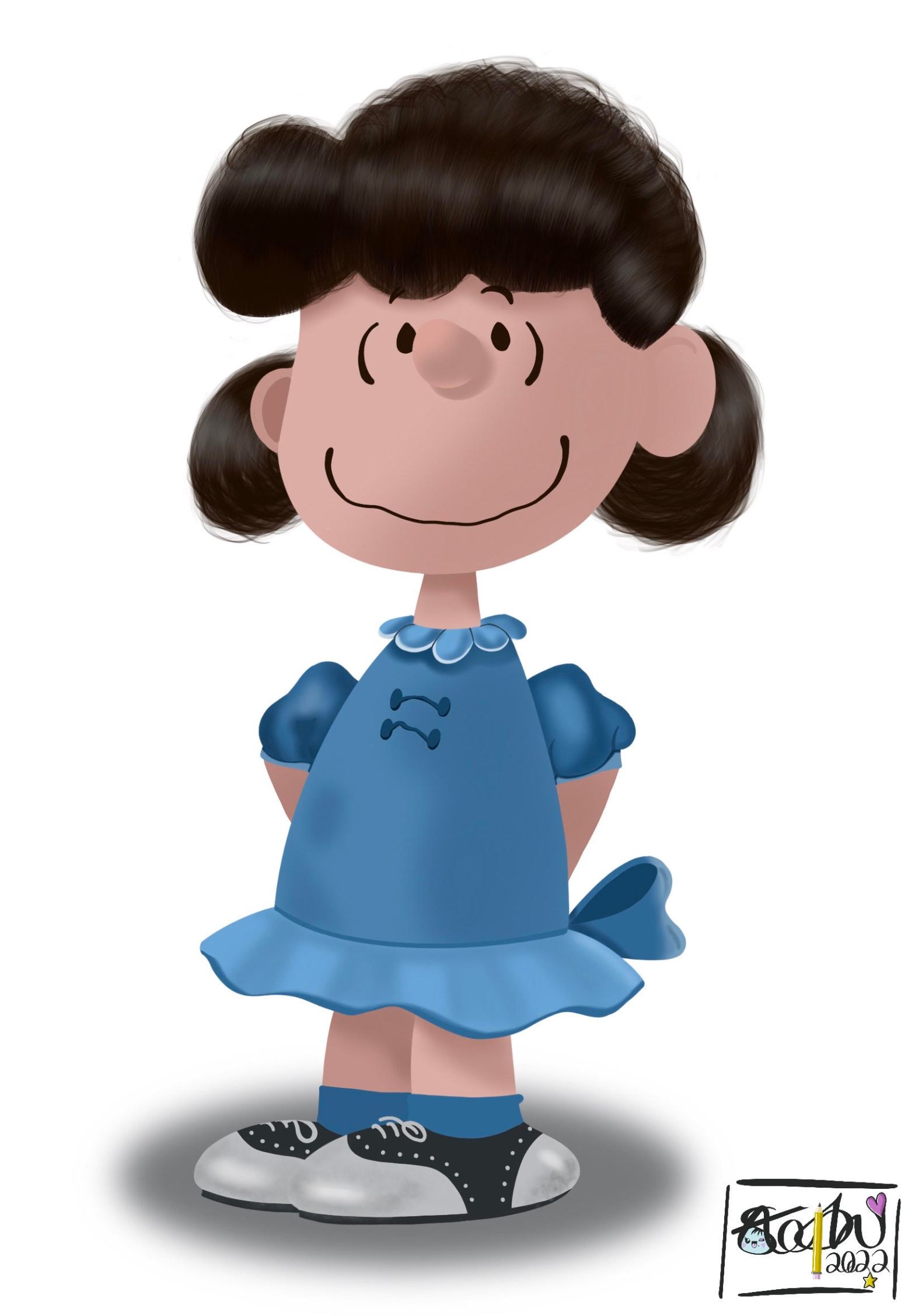
I chose to draw the character Lucy from The Peanuts Movie recently, and it felt like a good fit for this post.
This drawing was designed to come across in a 3D style, which meant that drawing the hair required precision and care. It was incredibly difficult to get right.
Despite this, I spent more time on my own hair this morning. Way more.
Thanks for reading 💜
 Creative Steph